


From French to English: Discover the Words You Already Know
What if you’re already speaking a little French every time you speak English?
It might sound surprising, but nearly 30% of English words come from French. From the food you eat to the clothes you wear, French is everywhere in English, even if you don’t always notice it.
French Words in English - A Shared History
The connection between English and French goes back nearly 1000 years. In 1066, William the Conqueror invaded England and brought the French language with him.
For centuries, French was the language of the English court, law, and high society, while English remained the language of everyday people. Over time, the two languages blended, and the result is the English we know today.
Food Vocabulary
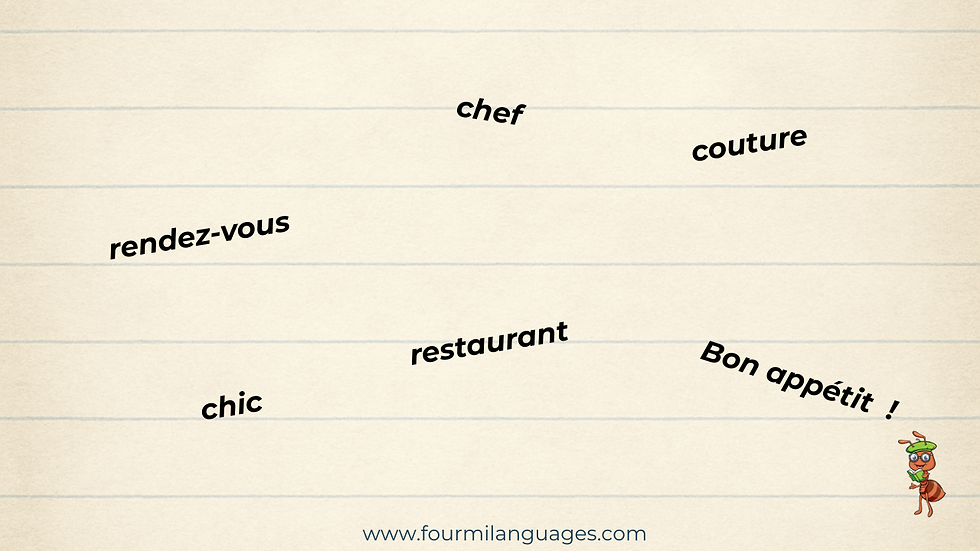
Next time you read a menu, pay attention. You are likely looking at French words:restaurant, menu, cuisine, chef, dessert, soufflé, omelette, entrée, gourmet, appetizer.
Here is a detail that reveals this history. Animals often have English names, while the food on your plate has French ones. For example, cow → beef and pig → pork.This happened because farmers spoke English, but the nobility who ate the prepared dishes spoke French.
Fashion and Luxury
French also dominates the language of style and elegance. When talking about fashion, English often turns to French for the right word:boutique, chic, haute couture, perfume, elegant, lingerie, couture, silhouette.
These words carry a sense of refinement that English has preserved over time.
Art and Culture
French has also shaped how we talk about creativity, art, and ideas:ballet, genre, collage, portrait, critique, avant-garde, nuance.
For example:
She loves classical ballet.
This movie mixes several genres.
The artist created a beautiful collage.
French Expressions Used in English
Some French expressions are so expressive that English borrowed them without changing them:déjà vu, bon appétit, faux pas, à la carte, rendez-vous, coup d’état, vis-à-vis, carte blanche.
You have probably heard, or even used, sentences like these:
I had a strange feeling of déjà vu.
Bon appétit!
That comment was a real faux pas.
Let’s meet tomorrow for a rendez-vous.
False Friends to Watch Out For
Be careful. Not all familiar-looking words mean the same thing.
library vs librairie
library = bibliothèque
librairie = bookstore
chef
in French: a leader or person in charge
in English: a professional cook
These “false friends” can be tricky, but once you recognize them, they become much easier to remember.
What Are Gallicisms?
You have just seen several examples of what linguists call gallicisms, which are French words, expressions, or structures used in other languages. They reflect a distinctly French way of speaking that has traveled across cultures. Common examples include déjà vu, fait accompli, and enfant terrible.
French is closer to English than you might think. The more you notice these connections, the easier it becomes to learn and remember new words.
If you would like to keep exploring French in a simple and practical way, you can read more articles here. And if you are ready to start speaking, take a look at the upcoming conversation workshops.


Comments